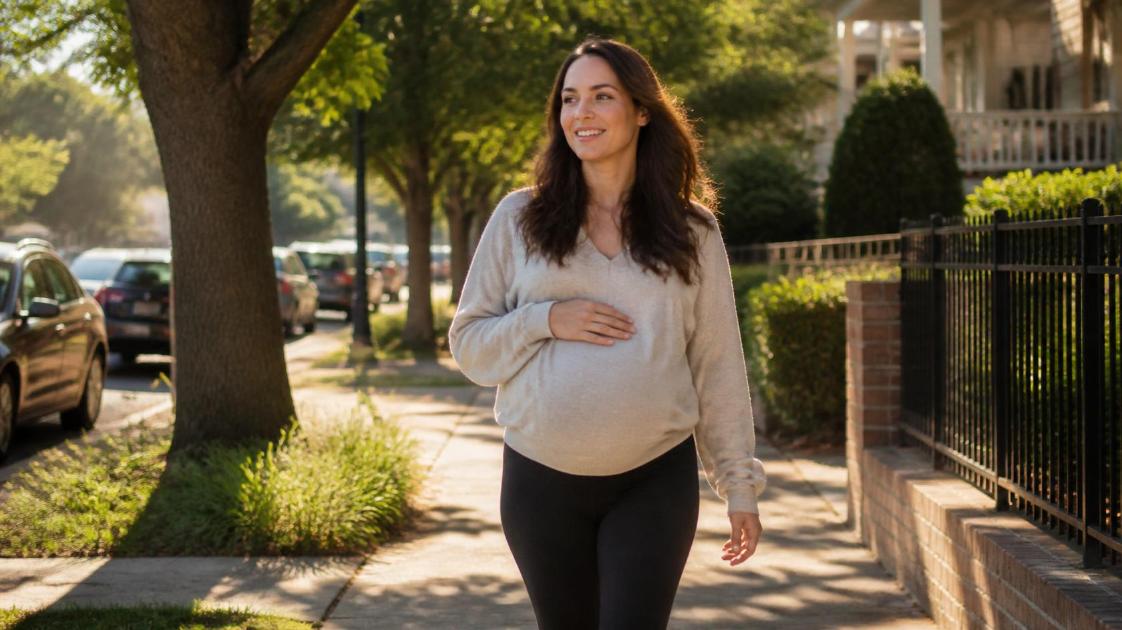
By the time many mothers reach the visibility of the final lap around the block, they have noticed an unusual development regarding their walks. They have turned into what they call “chapters” and not just “steps.”
They have also reported a desire to document each one before they become a thing of the past. The mothers have embraced the use of a pregnancy keepsake journal.
I have interviewed a select number of mothers who walk nearly every day of their pregnancy, and they all seem to agree on one thing. The walk becomes their most important and beneficial time to think.
It provides an escape from the constant buzzing of electronics and productivity. With time to think and a baby doing cartwheels in their belly, I can see how they would have a desire to document their experiences.
The Meditative Nature of a Pregnancy Walk
Pregnancy walks become ritualistic because of the reflective nature of the activity. With the methodical pacing of a pregnancy walk, attention is brought to things that are often missed during more high-intensity workouts.
For Reyna, a first-time mom, the walks became the only uninterrupted time she had with her baby. No phone calls, no to-do lists, just her and the baby and the sound of her own footsteps. Due to the changes brought by the pregnancy, walks became genuinely reflective in a way that surprised even her.
Walks provide time for contemplation and reflection. Daydreams, like thinking about potential baby names, become common. Over time, walks prompt reflections about the present that are usually ignored, like seeing kids at the park or the feeling you get when you push through the pain of a long walk.
These small moments become the highlights of your pregnancy when you look back and reflect.
What to Write About Your Walks
Recording your reflections brought on by pregnancy walks can feel like a daunting task at first. To make things easier, pregnancy walk fans recommend documenting a few common things, like the walk location.
Writing about your walk location helps capture memories that are often fleeting. For example, to remember the pregnancy during a long drive in the future, try to capture the thoughts you had during the walk.
How your body experienced the movement that day, without judgment. It is not a fitness log. Just a true note. Slower today. More aches and pains in the hips. Kicking throughout the whole thing like she was trying to join.
Reading back some of these notes postpartum really helps remind you of just how much your body was doing.
A conversation you had with the baby, out loud or in your head. This sounds silly until you try it. Plenty of moms talk to their bump on walks, narrating the weather or the plans for the day.
Writing even a fragment of that conversation down preserves a tenderness that photos just cannot capture the same way.
Something that you saw that made you smile. Maybe it was a dog that reminded you of a happier time. Perhaps it was a stranger that complimented your bump, or maybe just some blossoms on a tree that you just now noticed.
A shift that relates more to distance or time than just weeks of the pregnancy. Maybe instead of just writing “32 weeks”, write about how that was the last week you were able to do your normal 2-mile loop before switching to shorter walks. It is a shift that relates more to this pregnancy personally rather than just to a calendar.
Making a Habit, Not a Chore
The moms who journaled through all three trimesters saw it as anything but homework. Many kept it casual, with a few quick thoughts on a notes app transferred to real journals later, or quick scribbles on a page in a journal resting on a step outside the front door.
One mom even joked her journal “smelled a little like sunscreen and determination,” which honestly might be the best description of a walking pregnancy journal I have ever heard.
A tip that works really well is pairing the journaling with something you already do. If you stretch after every walk, use that cooldown to write two or three lines. It truly does not have to be neat or complete.
Some of the best journal entries I have ever seen are the most unrefined ones. The ones that trail off mid-sentence because the baby started moving and you had to stop and just feel it.
Why It Is Worth It
There is something genuinely moving about looking back at months worth of these tiny entries after the baby is finally born. The walks blend together fast, thanks to sleep deprivation, but the notes help pull them back.
You will be surprised at how much you changed during that time, even just reading a few entries. Reyna told me she read her notes after her daughter turned one and cried when she landed on an entry about a long-forgotten walk in the rain.
This kind of documenting is not so different from how people approach physical recovery milestones, the way someone tracking breast augmentation surgery walking and running afterwards might log those early cautious steps and then look back months later with a kind of quiet disbelief that they were ever that careful.
It is documentation as proof that the body did hard things.
This method of documenting pregnancy creates an opportunity for the pregnant person to give something to the child to read someday in the future. After the child has grown and the stroller is packed away, the walks taken for that child before the child was even given a name become a quiet gift.
The value of documenting the walks is not in the appearance of the entries but in the ability to capture real-time events in an honest fashion. Now, take a deep breath and let the next walk document itself.